
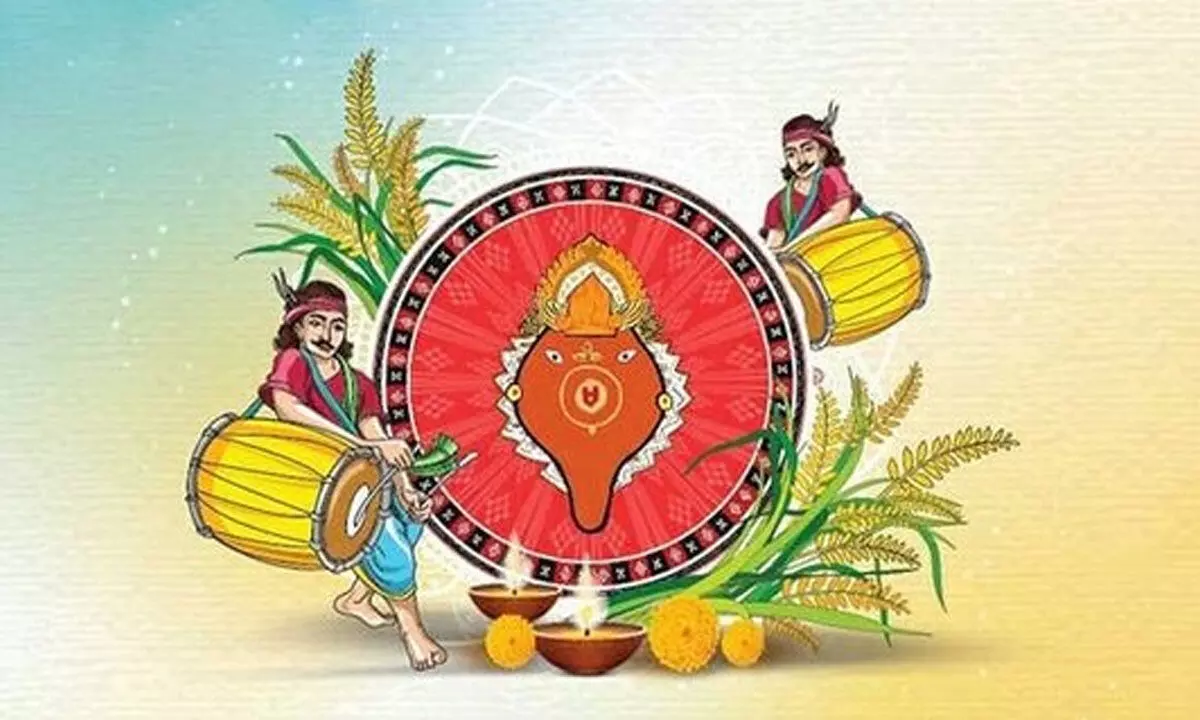
Nuakhai in Western Odisha is often described as a festival of harvest and homecoming. Families gather, new rice is offered to the presiding deity, and people celebrate bonds that hold communities together. But alongside rituals and reunions, the festival has also carried another quiet tradition for generations the practice of giving.
Adhia is an indispensable component of Nuakhai. It involves sharing small packets of food grains, vegetables, and sometimes clothes with those who may not have the means to celebrate the festival on their own, thus keeping the practice of giving going. In earlier times, landowners and well-to-do families would set aside part of the new harvest for their farmhands, domestic help and neighbours who were economically weaker. The idea was simple on the day of Nuakhai, no household in the village should feel left out. The Adhia was more than a symbolic gift. It often included all the festival essentials along with a handloom saree or gamcha, and sometimes a little financial support. It ensured that even the poorest could cook a meal, wear new clothes, and feel part of the larger celebration.
Over time, families across communities adopted the practice in their own capacity, keeping alive the idea of sharing joy at harvest. In Bargarh, this tradition has found a new expression through the ‘Samvidhan Suraksha Manch’, a local outfit which has been organising a ‘Nuakhai Jot Jat‘ for the past 10 years. Every year, a few days before the festival, the organisation hosts an event where more than 50 elderly and underprivileged people are invited. They are greeted as guests, entertained with poetry and performances, and presented with Adhia.
This year, the event was held on August 24. “Nuakhai brings happiness to the whole region, but there are always people who have no family support or resources to celebrate. We try to reach out to them so that they too can celebrate the festival with dignity and joy,” said Ramesh Mahapatra, a member of the organisation.
Throughout the year, he said, the organisation identifies people who live alone or struggle to make ends meet. On the day of Jot Jat, they become the honoured guests. “We seek their blessings and give them what we can, enough to make their Nuakhai special. The Adhia we give comprises new paddy, vegetables, pulses and other rations besides new clothes, everything that can make Nuakhai joyous and feed them at least for the next one week,” Mahapatra said.
The idea was first put into practice by convenor of the organisation, Pabitra Deheri. “The festival is a common thread that binds people together. If we can bring smiles to even a few faces on this day, the goddess will bless us for years to come,” he expressed.
Dehury added that the effort has slowly grown over the years. “Even if someone is left out during the programme, we make it a point to visit them later with the same Adhia. Lately, voluntary donors are also coming forward to contribute, which strengthens our hands. The start was small, but we now see young volunteers joining in, which gives us hope that this idea of sharing will continue.”
In the last decade, the Jot Jat has extended to several villages in Bargarh block, inspiring others to organise similar events in other blocks of the district. While the items included in Adhia may have changed, the purpose has remained the same. Through traditions like Adhia and community efforts such as the Jot Jat, it also becomes a reminder that festivals are about sharing as much as celebrating. The food, clothes or small tokens offered may not seem much, but for those who receive them, they bring warmth and belonging.
As Mahapatra puts it, “Rather than celebrating only within ourselves, if each of us can make someone else’s Nuakhai a little brighter, the festival becomes more meaningful.”
Samvidhan Suraksha Manch has also taken up other social initiatives, including mass marriages that cut across caste and financial barriers, and an annual Puspuni Bhetghat for differently-abled persons. Each of these, like the Jot Jat, is rooted in the same principle that festivals are meant to be “inclusive”.